How to Perform a Tire Pressure Inspection?
Proper tire inflation is fundamental to your vehicle’s safety, handling, and fuel efficiency. Maintaining the correct pressure ensures a smoother ride and extends the lifespan of your tires.
When and How to Check Tire Pressure
To ensure accuracy, tire pressure should be inspected when the tires are cold at least once every two weeks, for the most reliable readings.
Do not overlook the spare tire. It should be inspected with the same frequency as the primary tires. To accurately check the pressure, you may need to remove the spare from its storage compartment to access the valve stem.
Identifying the Recommended Pressure
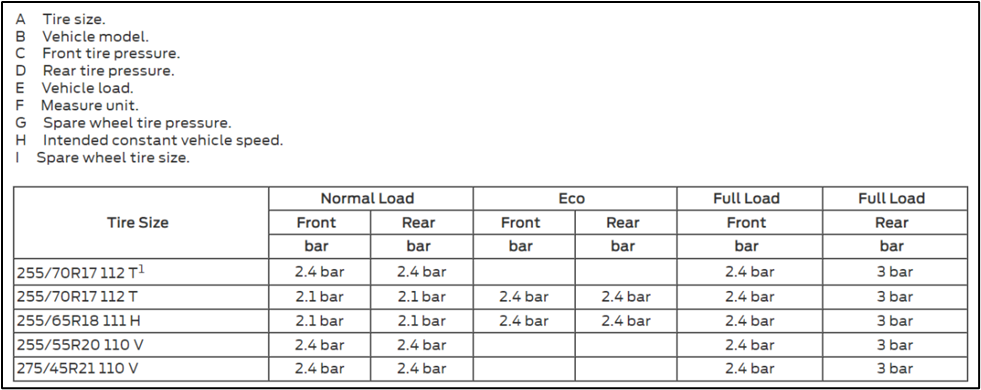
It is important to follow the manufacturer's specific recommendations rather than the Maximum Pressure listed on the tire sidewall. You can find the correct inflation specifications for your vehicle in the following locations:
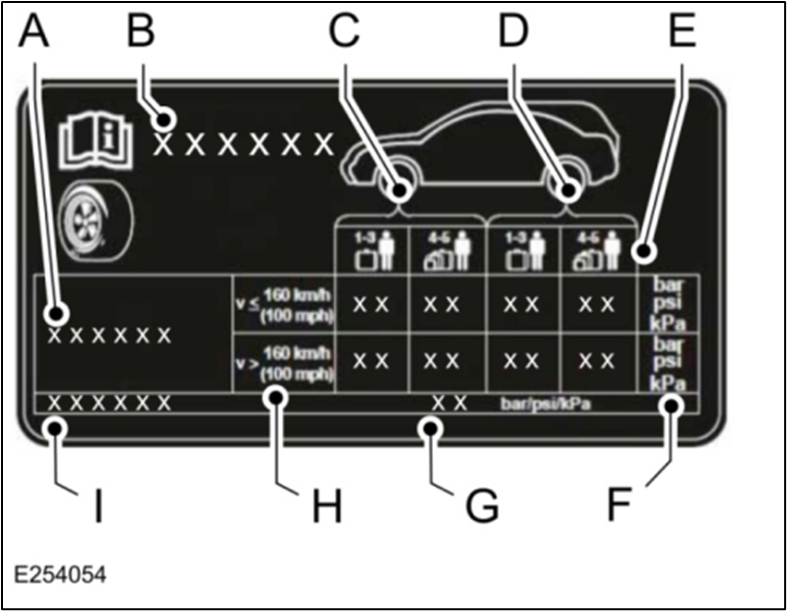
The Tire Information Label: Located on the driver-side B-pillar (the pillar where the door latches) or along the edge of the driver’s door.
The Safety Compliance Certification Label: Affixed to the door hinge pillar, the door latch post, or the edge of the driver’s door.
Guidelines for Inflation
Always inflate your tires to the specified pressure on the vehicle’s official labels. Using the recommended pressure—even if it is lower than the maximum pressure molded into the tire itself—ensures the vehicle performs as engineered.
Warning: Failure to maintain recommended tire pressures can lead to uneven tread wear, reduced fuel economy, and compromised vehicle handling, which may affect overall driving safety.
For additional assistance or technical details, please consult your Owner's manual or visit your Ford Dealership to speak with a service professional.
Sample of tire information label